Why Mineral Slurry Viscosity Complaints Are Not Always a Dispersant Problem
For a mining process chemical supplier, a viscosity complaint can arrive as a simple request: send a stronger dispersant, increase dosage, or change the product. In the plant, however, high slurry viscosity is rarely that simple.
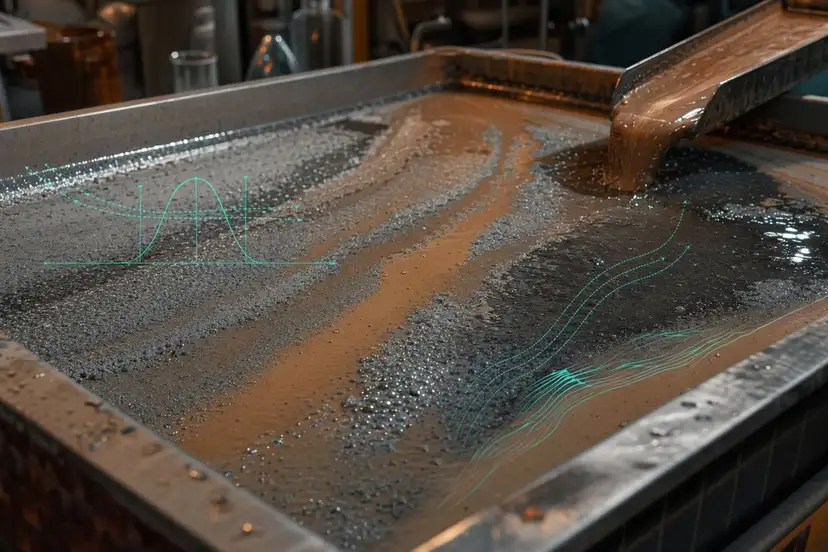
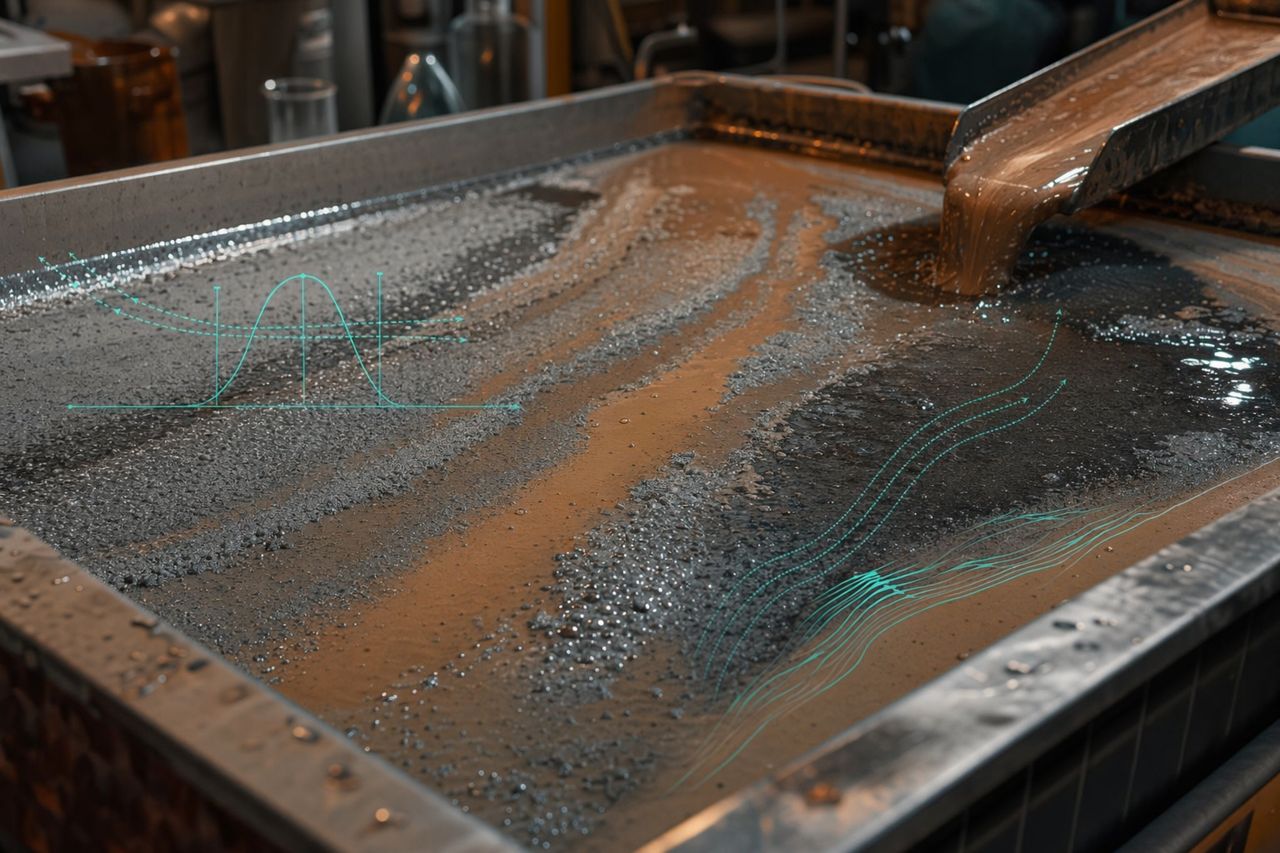
Apparent thickening can come from particle-size distribution, clay behavior, residual flocculant, organics, water chemistry, ore variability, or mechanical shear conditions. If the root cause is not identified, a dispersant-only response may increase cost, destabilize downstream separation, or create new issues in flotation, leaching, pumping, thickening, or tailings treatment.
StrataFlux supplies enzyme solutions for mining process chemical programs where viscosity, slime coating, organic residue, and water-phase conditioning need more than conventional reagent adjustment. The goal is not to replace core reagents. The goal is to help technical sales teams expand the diagnostic and treatment window when slurry behavior is being driven by more than mineral dispersion.
The commercial problem: one complaint, several failure modes
A site may report any of the following as a viscosity issue:
- Higher pump pressure or reduced transfer rate
- Poor cyclone classification stability
- Froth carryover changes linked to slime behavior
- Thickener feedwell instability or slow settling
- High yield stress in tailings lines
- Increased reagent demand after ore type change
- Leach pad permeability loss or poor agglomerate behavior
- Inconsistent lab-to-plant response from dispersants
Each symptom may look like a rheology problem. But the corrective route depends on what is driving the resistance to flow.
For suppliers, this matters commercially. If every viscosity complaint is treated as a dispersant dosage problem, the account conversation narrows to price, dosage, and competitor substitution. If the supplier can separate the root causes, the discussion becomes technical support, reagent program design, and plant-trial value.
First separation: is it particle packing or surface chemistry?
Slurries thicken when particles resist movement past each other. That resistance can come from physical packing, surface attraction, water retention, or gel-like structures.
Particle-size driven viscosity
Fine particle generation increases surface area and water demand. If milling produces excess ultra-fines, the slurry may become harder to pump even when surface chemistry is well controlled.
Typical indicators include:
- A shift toward finer particle-size distribution
- Higher solids surface area after a mill setting change
- Increased viscosity across several reagent conditions
- Poor response to dispersant increases beyond a threshold
- Classification instability or density control problems
In this case, the supplier conversation should include particle-size data, grind condition, cyclone performance, and solids loading. A stronger dispersant may not solve a physical packing limitation.
Surface chemistry driven viscosity
If surface charge, ionic strength, clay swelling, or slime coating is the main driver, reagent chemistry can have a larger effect. Here, dispersants, pH modifiers, water conditioners, and enzyme-supported organic residue treatment may all be relevant depending on the ore and process.
Typical indicators include:
- Strong sensitivity to process water source
- Large rheology change after pH adjustment
- Slime coating on valuable mineral or gangue surfaces
- Variable response when ore blend changes
- Interaction with collectors, depressants, flocculants, or frothers
This is where a broader process chemical supplier can create value: not just by selling a dispersant, but by mapping the interaction between water chemistry, ore surface condition, and downstream unit operations.
Clay is not one problem
Clay-related viscosity complaints are common in mineral processing, but clay is not a single behavior category.
Swelling clays
Swelling clays can hold water and build network structures that raise yield stress. A plant may see thickening, unstable pumping, and reduced throughput even if the solids percentage has not changed dramatically.
Potential supplier response areas:
- Water chemistry review
- pH and ionic strength management
- Clay-control reagent screening
- Process sequence changes
- Enzyme-supported treatment where organic-clay interactions are part of the problem
Non-swelling fine clays
Non-swelling clays can still cause slime coating, entrainment, poor settling, and flotation selectivity issues. The viscosity complaint may be secondary to a dispersion and surface contamination issue.
Potential indicators:
- Increased gangue entrainment in flotation
- Lower concentrate quality at similar recovery targets
- Thickener overflow clarity changes
- Higher reagent consumption to maintain performance
A dispersant can help in some cases, but indiscriminate dispersion may also move unwanted fines into circuits where they create new instability.
Polymer carryover can mimic ore-driven viscosity
Residual flocculants, coagulants, antiscalants, grinding aids, or upstream water-treatment polymers can alter slurry behavior. These materials may be present at low concentration but still influence particle bridging, water structure, froth behavior, or settling.
Questions worth asking during troubleshooting:
- Has the water source changed?
- Has thickener overflow recycle increased?
- Are tailings return streams entering the circuit differently?
- Was a new flocculant or coagulant introduced?
- Is there polymer over-dosing in a nearby unit operation?
- Does the viscosity issue track with recycle water rather than ore feed?
For mining chemical suppliers, this is a useful diagnostic branch. If a viscosity issue follows recycled process water, the best answer may be conditioning, polymer management, or targeted organic residue treatment rather than additional dispersant.
Organic residues are often under-investigated
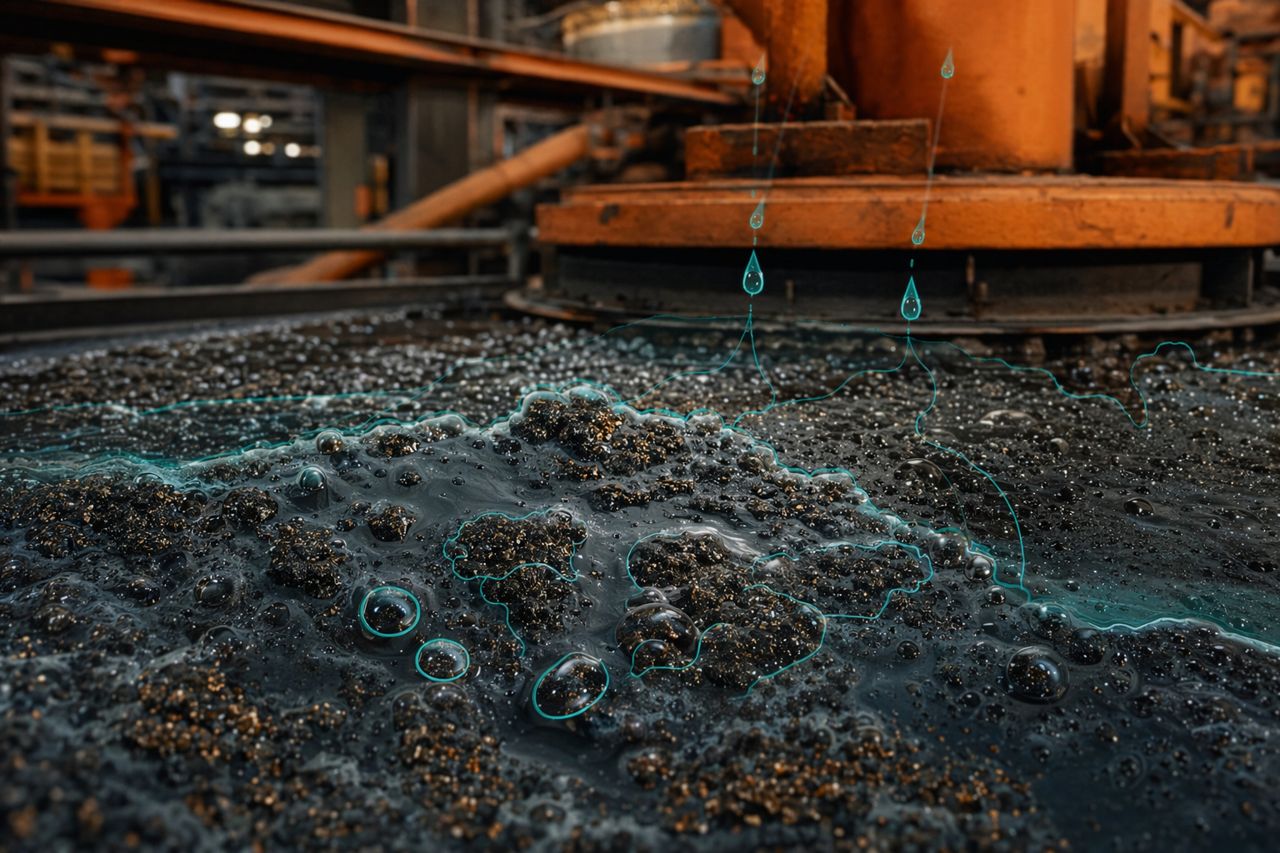
Organic residues can enter mining circuits from collectors, depressants, frothers, lubricants, process water, ore-associated carbonaceous matter, or upstream treatment chemicals. These residues may influence slurry rheology indirectly by changing surface hydrophobicity, slime coating, bubble-particle interactions, or water-phase behavior.
This is a practical fit for enzyme-supported programs. Enzyme solutions can be evaluated as part of a controlled treatment strategy where organic films, residue buildup, or water-phase organics are suspected contributors to handling instability.
Relevant application areas include:
- Flotation support where organic films or slime interactions affect selectivity
- Leach optimization where residue management may support permeability and contact efficiency
- Slurry conditioning where process water organics influence flow behavior
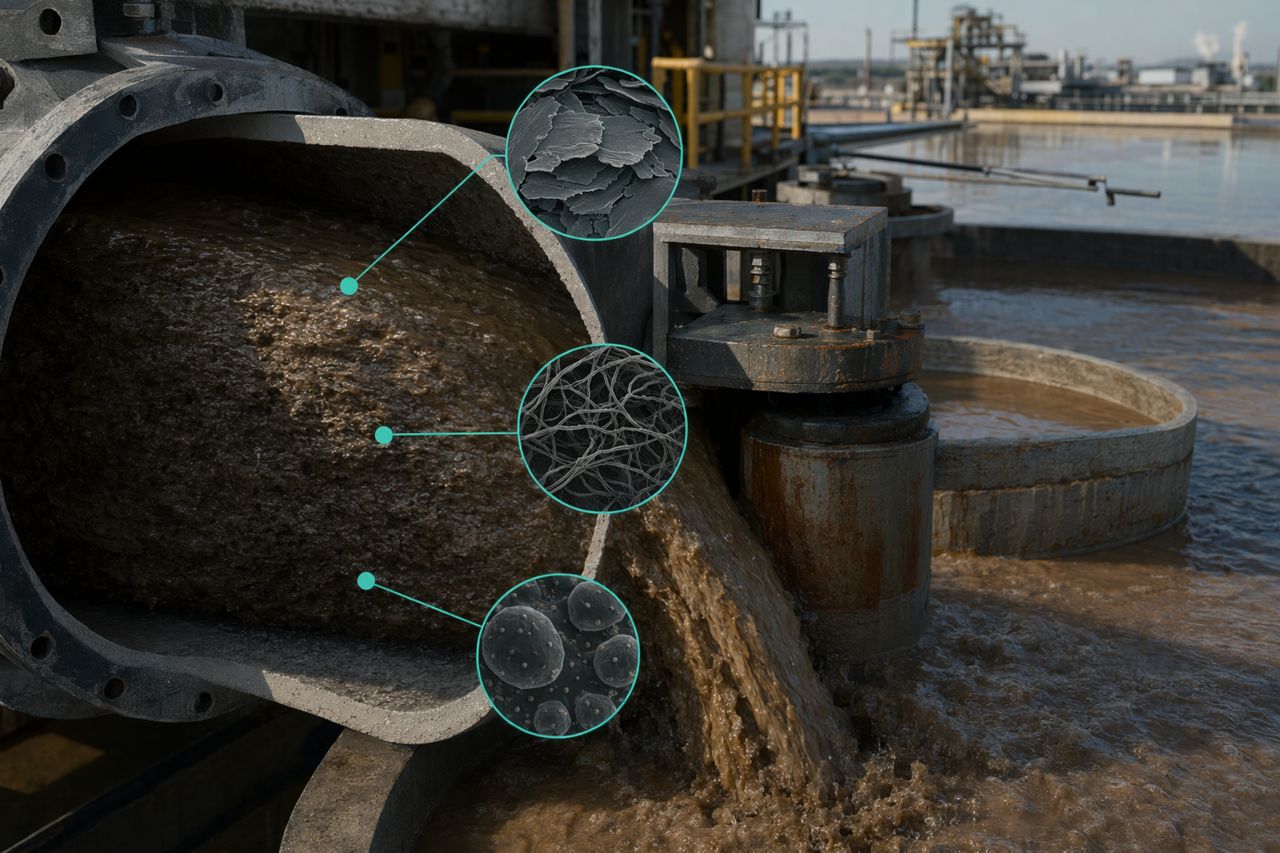
- Tailings treatment support where residual polymers or organics complicate settling and transport
The value for the supplier is not a generic enzyme claim. It is the ability to offer a targeted, trial-ready tool when the root cause points toward organic or polymeric interference.
Dispersant response curves can be misleading
A plant trial may show that more dispersant initially reduces viscosity. Then the curve flattens, reverses, or creates downstream problems. This does not always mean the dispersant is poor. It may mean the dispersant is treating one part of a multi-cause problem.
Watch for these patterns:
- Early viscosity reduction followed by no additional benefit
- Increased fines mobility but poorer flotation selectivity
- Improved pumping but slower settling
- Lab success that does not transfer to plant scale
- Sensitivity to water recycle ratio
- Better performance on one ore blend and poor response on another
A strong technical sales position is to avoid defending a single product too early. Instead, build a decision tree that separates physical, chemical, polymeric, and organic causes.
A field diagnostic framework for suppliers
When a customer reports slurry viscosity problems, use a structured review before recommending a dosage increase.
1. Define the symptom in plant terms
Ask where the complaint is occurring:
- Mill discharge
- Cyclone feed
- Flotation feed
- Concentrate handling
- Thickener feed or underflow
- Leach slurry or agglomeration stage
- Tailings transfer line
The location narrows the likely causes.
2. Check what changed first
Important change points include:
- Ore type or blend
- Grind target
- Solids density
- Process water source
- Recycle water ratio
- pH control range
- Flocculant or coagulant selection
- Collector, depressant, or frother program
- Pumping distance or shear profile
A viscosity complaint that appears after a water change should not be treated the same way as one that appears after a grind shift.
3. Separate particle effects from water-phase effects
A useful screening approach is to compare slurry behavior across controlled changes in solids loading, water source, pH range, and reagent sequence. The question is not simply which bottle makes the slurry thinner. The question is which variable changes the mechanism.
4. Map downstream risk
Before recommending a stronger dispersant, confirm the downstream tradeoffs:
- Will greater dispersion increase gangue entrainment?
- Will it affect froth stability?
- Will it delay settling in the thickener?
- Will it mobilize fines into a leach or tailings stream?
- Will it increase water-treatment demand?
This keeps the supplier aligned with plant economics rather than a narrow viscosity number.
Where enzyme solutions fit in a mining reagent portfolio
StrataFlux enzyme products are designed for suppliers who need differentiated process support alongside conventional mining chemicals. They can be positioned as part of a broader troubleshooting toolkit for circuits where organic residues, polymer interactions, clay-associated films, or process water contamination may be influencing slurry behavior.
Potential portfolio roles include:
- Adjunct treatment for slurry conditioning programs
- Support tool for flotation circuits experiencing residue-related selectivity issues
- Process-water conditioning support where organics or residual polymers are suspected
- Tailings treatment support where settling, flow, or residual chemical carryover requires additional evaluation
- Leach circuit support where residue control may improve solution contact and flow pathways
Compatibility should always be confirmed against the site reagent package, water chemistry, pH window, temperature range, and intended point of addition. StrataFlux supports technical screening and plant-trial planning so suppliers can evaluate fit without disrupting core reagent programs.
Practical trial positioning
For a customer-facing plant trial, a supplier should avoid presenting enzyme treatment as a universal viscosity reducer. A stronger position is:
- Identify whether organics, polymer carryover, or residue films are part of the failure mode
- Confirm compatibility with existing dispersants, collectors, frothers, depressants, and flocculants
- Select a controlled addition point based on the unit operation affected
- Track plant-relevant outcomes such as pumpability, settling behavior, flotation stability, leach contact, or tailings transport
- Compare against a baseline reagent program rather than an isolated lab response
This positions the supplier as a technical partner, not a commodity additive source.
Key takeaway
A slurry viscosity complaint is a starting point, not a diagnosis. Dispersants are important, but they are not the only lever. Particle-size distribution, clay type, polymer carryover, organic residues, water chemistry, and unit-operation context all determine the right response.
For mining process chemical suppliers, the opportunity is to bring a broader, field-aware toolkit to the account. StrataFlux supports that position with enzyme solutions built for mining reagent portfolios, plant-trial conversations, and targeted troubleshooting around flotation support, leach optimization, slurry conditioning, and tailings treatment support.
Request a quote
If you supply mining process chemicals and need an enzyme supplier for mining process chemicals, StrataFlux can support product selection, compatibility review, and trial planning for your customer application.
Request a quote using the on-site form and include the ore type, circuit location, process water details, current reagent package, and the viscosity or handling symptom being investigated.