Mining Wastewater Organics vs Inorganics: Why the Difference Changes the Treatment Plan
Mining wastewater is rarely a single contaminant problem. A process stream can carry hydrocarbon residues from mobile equipment, flotation reagent carryover, fine suspended clays, dissolved metals, hardness, sulfate, and variable pH—all in the same circuit. For a mining process chemical supplier, the commercial risk is treating that mixed signal as one generic wastewater issue.
The treatment plan changes when the load is mainly organic versus inorganic. The additive logic changes. The jar-test sequence changes. The compatibility questions change. And the value story to the mine site changes from “remove contamination” to a more precise answer: stabilize the stream, protect downstream chemistry, and help the plant stay inside its operating window.
StrataFlux supports chemical suppliers looking to build differentiated programs around flotation support, leach optimization, slurry conditioning, and tailings treatment support. As an enzyme supplier for mining process chemicals, we focus on where enzyme-compatible components can help address process-derived organic interference without pretending enzymes solve metals, hardness, or mineral solids by themselves.
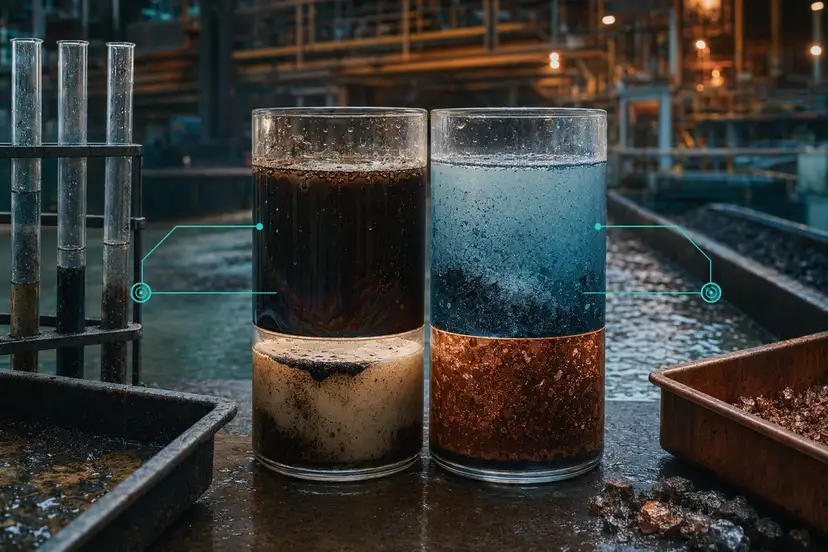
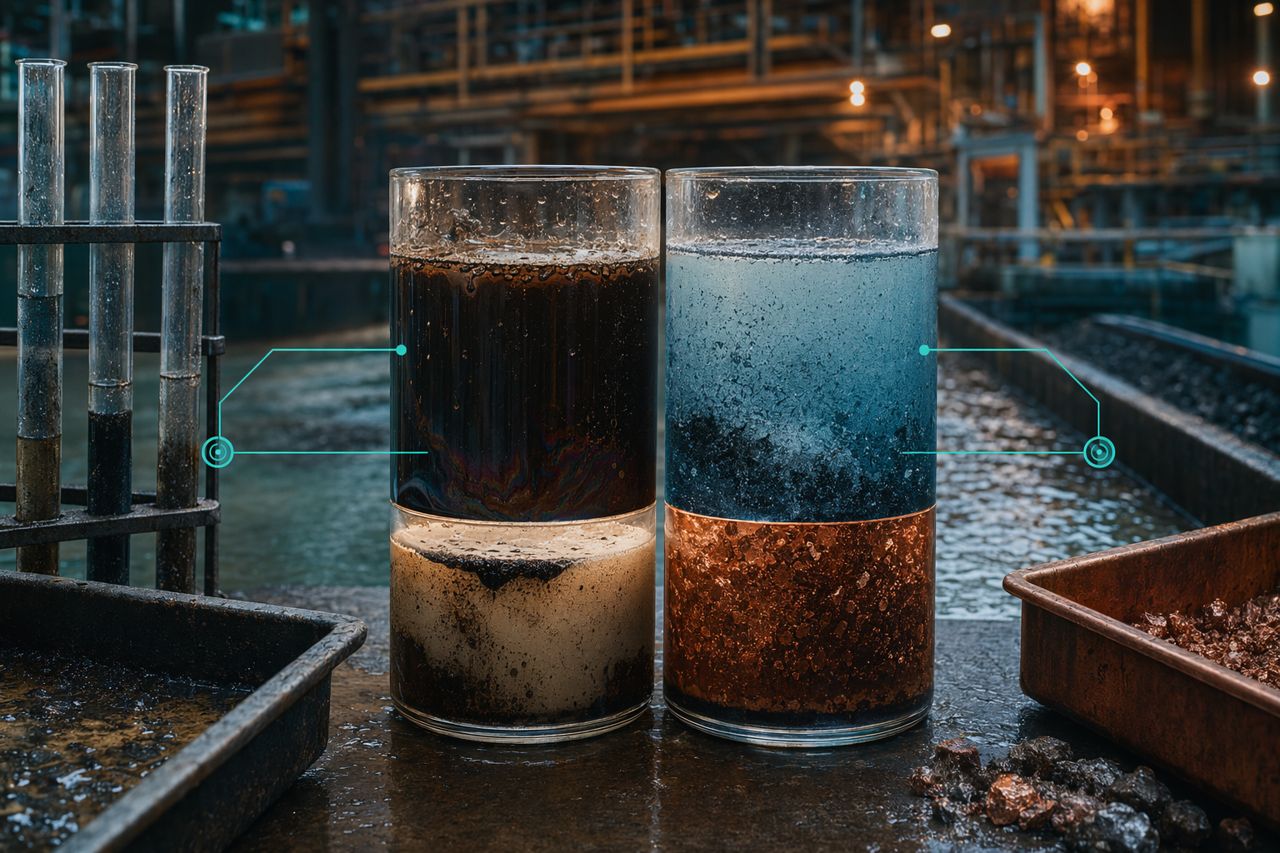
The practical difference: organics behave like chemistry, inorganics behave like mass and ions
Organic wastewater issues in mining tend to come from carbon-based process inputs and site operations. Typical sources include flotation collectors and frothers, process oils, hydrocarbon traces, residual polymers, anti-scalants, and organic matter introduced through recycled water systems.
Inorganic wastewater issues are different. They are often tied to mineral fines, dissolved salts, metal ions, alkalinity, acidity, hardness, sulfate, silica, and precipitated scales. These loads respond to charge management, pH control, oxidation-reduction conditions, precipitation, clarification, filtration, and solids handling.
That distinction matters because organic load can disrupt reagent performance even when the water looks visually manageable. Inorganic load can overwhelm treatment capacity even when organic indicators are low. A plant troubleshooting conversation needs both lenses.
What organic load changes in a treatment plan
Organic contamination can shift how reagents wet, disperse, float, flocculate, or adsorb. In mineral processing terms, organics can become surface-active noise.
Common effects include:
- Foam instability or persistent froth in recycled process water
- Reduced selectivity in flotation circuits
- Collector carryover into water reuse loops
- Oily films on particle surfaces or tank interfaces
- Polymer demand shifts in clarification or tailings thickening
- Odor and degradation issues in holding ponds or closed-loop water systems
- Variability that appears after maintenance, fuel contact, or changes in ore blending
For chemical suppliers, organic load is an opportunity to move beyond commodity treatment. If your customer is seeing inconsistent flotation response, unstable thickener overflow, or tailings water recycle problems, the root cause may not be a simple coagulant dose issue. It may be an organic interference issue that needs a different additive layer.
Where enzyme-supported logic can fit
Enzyme-supported components are most relevant when the target problem is process-derived organic residue, not dissolved metals or mineral hardness. In the right compatibility window, enzyme-enabled formulations may support breakdown, transformation, or conditioning of specific organic contributors so the rest of the treatment train performs more consistently.
Commercially, this can help suppliers position a program around:
- Pretreatment support ahead of clarification
- Water recycle conditioning for process stability
- Reduction of organic carryover effects in closed-loop circuits
- Support for tailings pond or reclaim water management
- Cleaner troubleshooting narratives during plant trials
The key is proper positioning. Enzymes are not a universal mining wastewater treatment. They are a technical component for organic-focused problems where water chemistry, contact time, pH range, temperature, and reagent compatibility make sense.
What inorganic load changes in a treatment plan
Inorganics are usually the domain of classical mining water treatment: precipitation, neutralization, coagulation, flocculation, sedimentation, membrane protection, filtration, and solids management.
Common inorganic drivers include:
- Suspended mineral fines and colloidal clays
- Dissolved metals such as iron, copper, manganese, zinc, nickel, or aluminum
- Calcium and magnesium hardness
- Sulfate and salinity load
- Silica and scale-forming species
- Acidic or alkaline process waters
- High-density slurries with shear-sensitive flocs
These problems are not solved by enzymes. They require inorganic treatment logic: pH adjustment, charge neutralization, precipitation chemistry, floc architecture, settling velocity, underflow density, overflow clarity, and compatibility with plant recycle targets.
For a mining chemical supplier, the critical point is diagnostic discipline. Do not sell an organic-control tool into a metals precipitation problem. Do not push more coagulant into an organic surfactant issue and expect stable results. Separate the load, then build the program.
Mixed wastewater is where supplier expertise shows
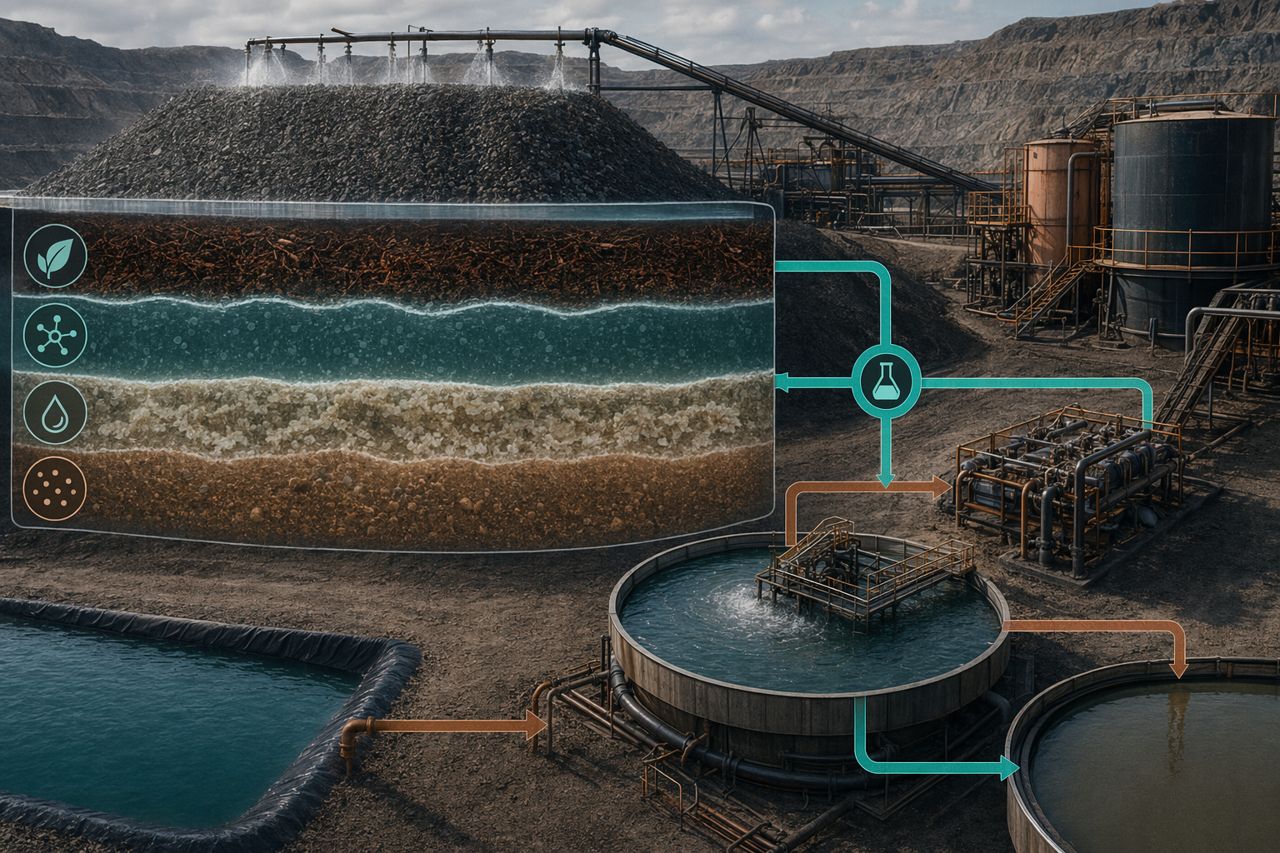
Most mine water systems contain both organic and inorganic stressors. A flotation plant may have collector carryover, frother residues, suspended fines, hardness, and dissolved metals in the same water loop. A heap-leach operation may manage raffinate balance, fines migration, scaling tendency, and organic contact from equipment or processing aids. Tailings circuits may show polymer sensitivity, reclaim water variability, and residual reagent effects.
That is where a structured treatment plan matters.
A practical supplier framework:
- Define the dominant constraint: clarity, metals, foam, scaling, recycle quality, or discharge requirement.
- Separate organic interference from inorganic loading.
- Check pH, salinity, temperature, oxidants, and surfactant environment for compatibility.
- Sequence additives so each component works in its proper window.
- Run plant-relevant trials using the customer’s actual process water.
- Track performance against operational outcomes, not just bench appearance.
The best programs are not built around one additive. They are built around a sequence: condition the problem, remove or stabilize the load, protect downstream chemistry, and maintain circuit reliability.
Why this matters for flotation support
Flotation performance is highly sensitive to water chemistry. Organic residues can change froth behavior, interfere with collector selectivity, and create inconsistent particle attachment. Inorganic ions can alter mineral surfaces, consume reagents, or change pulp chemistry.
If the problem is mainly inorganic, the answer may be water conditioning, pH control, dispersant review, or metal ion management. If the problem is organic carryover, an enzyme-compatible additive strategy may support water quality improvement before the stream returns to the circuit.
For technical sales managers, the value is a stronger plant-trial conversation: identify whether the customer is fighting surface-active organics, dissolved ion effects, suspended solids, or some combination.
Why this matters for leach optimization
Leach circuits depend on predictable solution chemistry and flow distribution. Inorganic problems such as scaling, fines migration, and metal loading can restrict percolation or create treatment burdens downstream. Organic contamination can affect wetting, biofilm-like deposits, odor, or unwanted surface effects in certain recycle streams.
Enzyme-supported chemistry is not a leach reagent replacement. Its role, where appropriate, is to support management of compatible organic residues that may compromise water reuse or ancillary treatment steps. That distinction helps suppliers avoid overclaiming while still offering a differentiated option.
Why this matters for slurry and tailings treatment
Tailings treatment is often dominated by suspended solids, clay behavior, floc strength, underflow density, and reclaim water quality. Inorganic solids are the primary mass challenge. But residual organics can still affect polymer response, foam, overflow quality, and pond-water behavior.
A supplier that can evaluate both sides—mineral solids and organic interference—has a better chance of building a robust tailings support package. Enzyme-compatible components may fit as a targeted organic-conditioning layer, while coagulants, flocculants, pH modifiers, and solids-handling aids continue to do the heavy lifting on mineral load.
Compatibility cues before proposing an enzyme-supported component
Before positioning enzymes in a mining wastewater program, technical teams should qualify the operating window:
- Is the main issue organic interference rather than metals, hardness, or suspended solids?
- Is the stream compatible with the expected pH and temperature range?
- Are oxidants, biocides, surfactants, or high salinity likely to reduce effectiveness?
- Can the additive be sequenced away from harsh chemical steps?
- Is the plant willing to trial against a defined operational target?
- Will performance be evaluated in the actual water matrix rather than a simplified sample?
These questions protect supplier credibility. They also help customers see the program as engineered, not speculative.
B2B value for mining process chemical suppliers
For reagent portfolio managers and technical sales teams, the organics-versus-inorganics distinction creates sharper product positioning. It helps determine when to recommend conventional treatment chemistry, when to troubleshoot process carryover, and when to introduce enzyme-supported chemistry as a targeted additive layer.
StrataFlux works with mining chemical suppliers that need:
- Enzyme-compatible components for organic-focused water and process challenges
- Guidance for formulation positioning in rugged mine water conditions
- Compatibility framing for plant trials and customer troubleshooting
- Clear use-case language for flotation support, leach optimization, slurry conditioning, and tailings treatment support
- Commercially practical options that fit into existing reagent portfolios
Treatment plan logic: match the contaminant to the mechanism
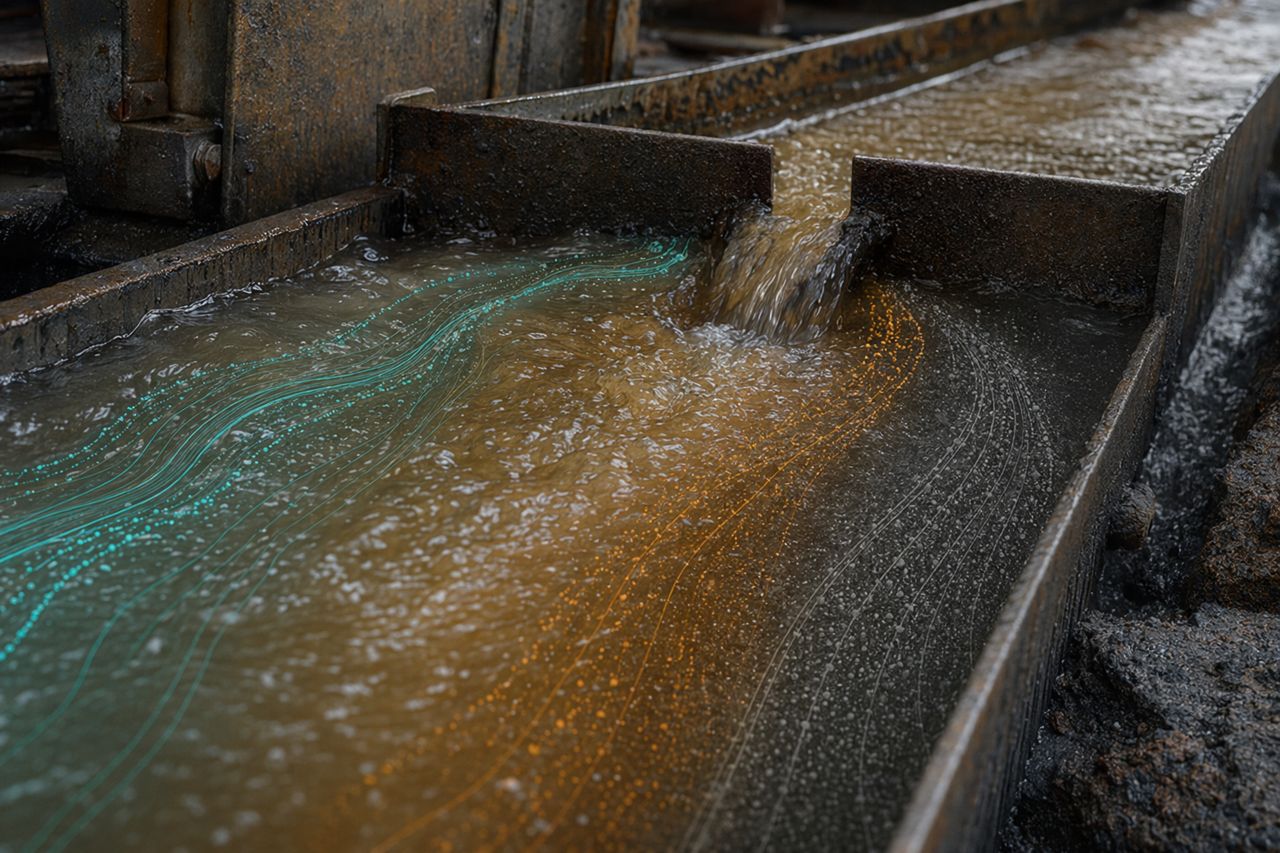
Organics, suspended solids, metals, and hardness do not respond to the same mechanism. A plant may need all of the following in sequence:
- Organic conditioning to reduce interference from compatible carbon-based residues
- pH adjustment to place metals or scale-forming species in the right treatment window
- Coagulation and flocculation to capture fines and colloids
- Precipitation or adsorption chemistry for dissolved inorganic species
- Solids separation to protect reclaim water or discharge quality
- Ongoing compatibility review as ore, recycle rate, and reagent use change
That is the core lesson: the treatment plan should follow the contaminant class, not the appearance of the water.
Build a sharper wastewater additive program
Mining wastewater chemistry is kinetic, variable, and site-specific. The right supplier response starts by separating organic interference from inorganic loading, then building a treatment sequence that respects both.
If your mining chemical portfolio needs enzyme-supported options for organic conditioning, water recycle support, or plant-trial differentiation, StrataFlux can help define the right fit.
Request a quote for mining process chemical enzyme supply and compatibility support.