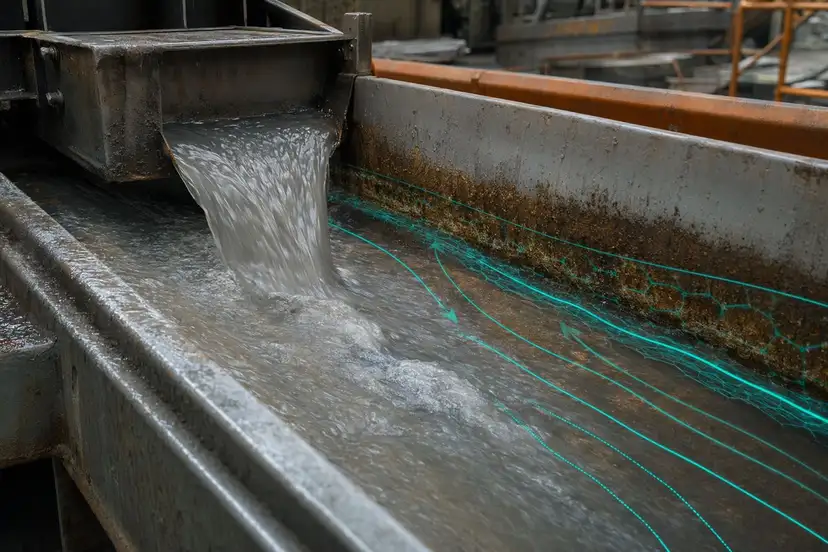
Tailings Water Reuse and Organic Fouling Guide | StrataFlux

A practical guide for mining chemical vendors managing recycled tailings water, organic fouling, residual reagents, microbial films, and enzyme-compatible additive programs.

Request pricing

Tailings Water Reuse and Organic Fouling: A Practical Guide for Chemical Vendors

Mining operations are pushing more process water back into circulation. For chemical suppliers, that shift changes the service conversation. Recycled tailings water can carry dissolved organics, residual collectors, frothers, flocculants, dispersants, fines, biofilms, and variable salts back into flotation, leach support, thickening, and water treatment circuits.

StrataFlux supports reagent vendors that need a technically credible enzyme supplier for mining process chemicals. Our role is to help your team position enzyme-enabled additives where organic loading, microbial films, slurry conditioning limits, or water reuse instability create room for a differentiated formulation.

This guide outlines the failure modes to watch, the compatibility questions to ask, and the commercial use cases where enzyme solutions can strengthen a mining process chemical portfolio.

Why tailings water reuse changes reagent performance

Closed-loop and high-recycle water systems reduce freshwater dependency, but they also concentrate the chemistry of the plant. Tailings return water may include:

  • Residual flotation reagents and degradation by-products
  • Dissolved and colloidal organics from ore, process aids, or site water
  • Microbial films on pipelines, launders, ponds, and clarifiers
  • Fine suspended solids that increase viscosity and reduce settling efficiency
  • Variable hardness, salinity, pH, and oxidation-reduction conditions
  • Traces of hydrocarbons, binders, polymers, or process contaminants

For a technical sales manager, the important point is not that recycled water is dirty. It is that recycled water becomes chemically dynamic. The same collector, frother, flocculant, or scale-control package may behave differently from site to site, and even across operating campaigns at the same site.

Organic fouling is a process chemistry problem

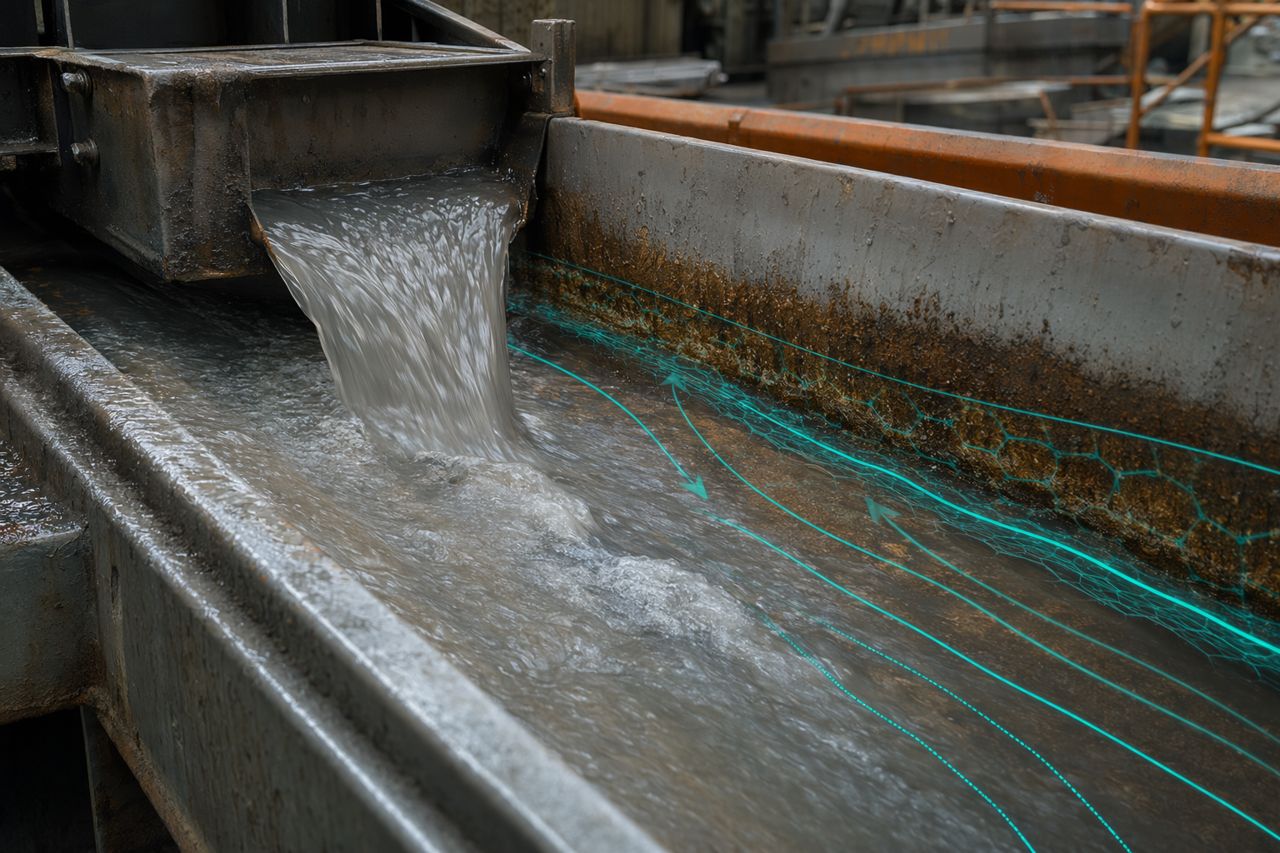
Organic fouling in mining water systems is often discussed as housekeeping, but its effects are tied directly to reagent performance. Films and organic residues can alter surfaces, interfere with particle-bubble contact, reduce flocculant efficiency, and create unstable dosing windows.

Common symptoms include:

  • Sluggish or inconsistent froth response
  • Higher apparent demand for flotation support reagents
  • Slower settling or less compact tailings beds
  • Increased turbidity in reclaimed water
  • Deposit formation in pipelines, clarifiers, sumps, and pond return lines
  • Changes in leach solution contact efficiency where organics affect permeability or flow behavior
  • Customer complaints that a familiar reagent package is no longer responding as expected

In many cases, the vendor is asked to solve the visible symptom. Enzyme-enabled support chemistry helps address part of the underlying organic load that contributes to unstable process behavior.

Where enzymes fit in a mining chemical portfolio

StrataFlux enzyme solutions are not positioned as a replacement for core collectors, depressants, flocculants, scale inhibitors, or biocides. They are portfolio tools for targeted support applications where organic residues, films, or slurry behavior influence performance.

1. Tailings water organic load management

Enzyme solutions can be formulated to help modify selected organic residues in recycled water loops. For vendors, this creates a practical additive concept for operations facing rising chemical demand, pond return instability, or recurring organic fouling in reclaim streams.

Commercial value:

  • Differentiates a water-reuse support package beyond commodity clarification chemistry
  • Gives the sales team a technical pathway for difficult recycled-water accounts
  • Supports plant trials focused on improved consistency, not broad miracle claims

2. Microbial film and bio-organic residue support

Mining sites with warm climates, long retention ponds, nutrient ingress, or stagnant sections can develop persistent films. Enzymes can support the breakdown of components within bio-organic matrices, helping other cleaning, dispersing, or treatment chemistries reach the deposit more effectively.

Commercial value:

  • Supports maintenance-oriented programs for pipelines, launders, sumps, and clarifiers
  • Fits into broader deposit-control strategies without forcing a full reagent redesign
  • Provides a field-aware talking point when fouling is recurring but not purely inorganic scale

3. Slurry conditioning and fines handling support

Fine particles, organics, and residual polymers can create difficult slurry behavior. Enzyme-enabled additives may help condition organic contributors that affect viscosity, turbidity, or settling response, depending on site chemistry and formulation design.

Commercial value:

  • Builds a stronger tailings treatment support offer
  • Helps vendors engage thickener, clarifier, and water-recovery problems with a more technical package
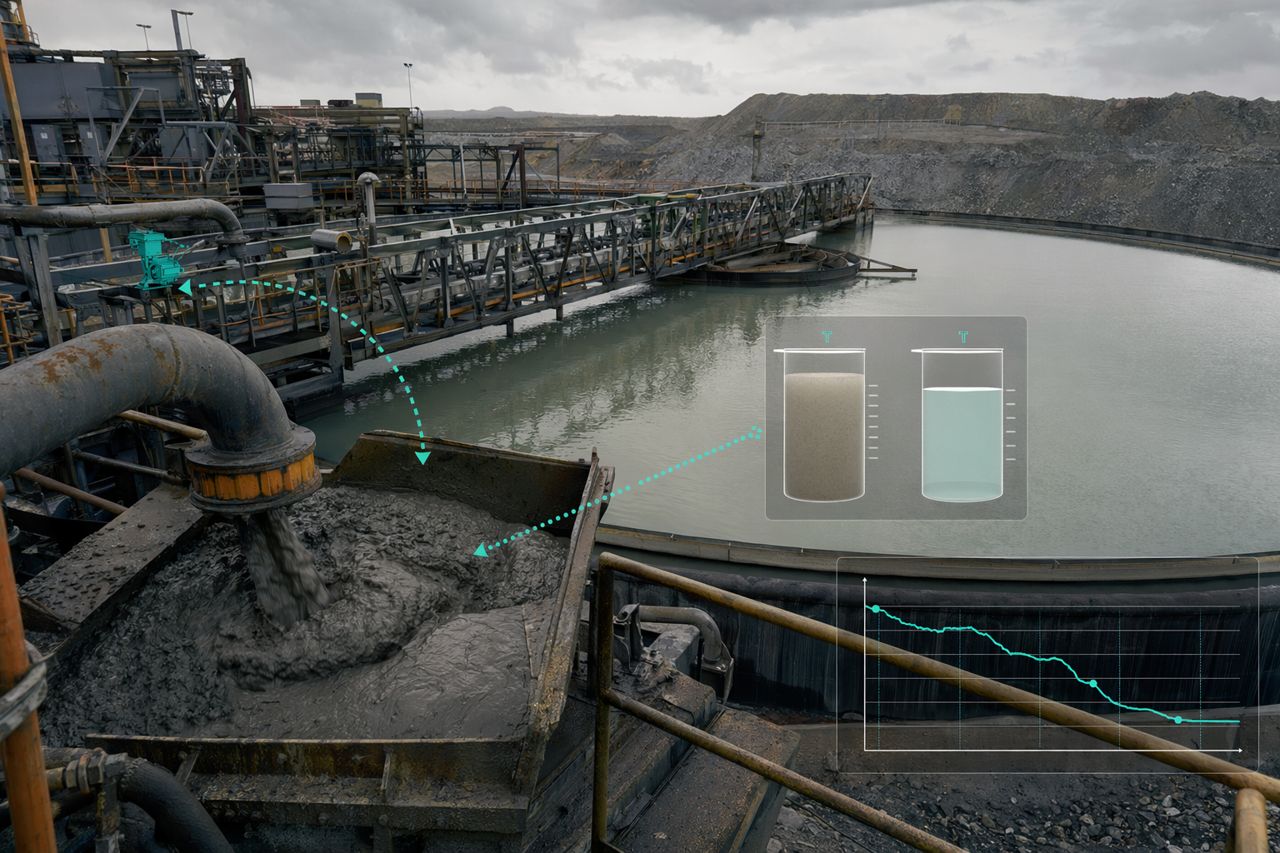
  • Supports trial designs that measure clarity, settling profile, bed behavior, and returned-water quality

4. Flotation circuit support under recycled-water pressure

Recycled water can introduce organics and residual reagents that influence froth stability, selectivity, and reagent demand. Enzyme additives may be evaluated as part of a support package where organic contamination is suspected to be disrupting flotation response.

Commercial value:

  • Creates a credible extension to flotation support services
  • Gives account managers a tool for water-related troubleshooting without repositioning the entire collector program
  • Supports customer discussions around variability, conditioning time, and upstream water quality

5. Leach optimization support where organics affect flow or surface access

In heap-leach and related hydrometallurgical settings, organic residues and fines can influence wetting, solution movement, and contact efficiency. Enzyme-enabled additives may support programs aimed at organic residue modification or surface-access improvement, subject to compatibility with site chemistry.

Commercial value:

  • Expands supplier relevance beyond flotation and tailings into leach support
  • Supports differentiated troubleshooting for permeability, pond recycle, and solution-management conversations
  • Provides a targeted additive path for sites where organics are a known operating variable

Compatibility questions chemical vendors should ask before a plant trial

A practical enzyme program starts with the process environment. Before selecting or proposing an additive, gather the following information from the operation:

Water and slurry conditions

  • Recycle ratio and source of make-up water
  • pH range across the circuit
  • Temperature range under normal and seasonal operation
  • Salinity, hardness, and dissolved metals profile
  • Suspended solids and fines behavior
  • Oxidizing or reducing conditions where relevant

Existing reagent package

  • Collectors, frothers, depressants, and modifiers in the flotation circuit
  • Flocculants, coagulants, dispersants, and scale inhibitors in water and tailings treatment
  • Biocides, oxidants, cleaners, or maintenance chemicals used in the system
  • Polymer carryover or residual organics from upstream process aids
  • Any planned reagent substitutions during the proposed trial window

Fouling pattern

  • Location of deposits or films
  • Frequency of cleaning or line flushing
  • Visual description of the fouling material
  • Whether symptoms worsen after water-reuse changes, ore changes, or seasonal shifts
  • Impact on froth behavior, settling, turbidity, leach flow, or reclaim-water quality

This information helps StrataFlux recommend enzyme candidates and formulation directions with fewer false starts.

How to position enzyme additives without overclaiming

Mining customers value practical, testable claims. The strongest commercial positioning is specific and measurable:

  • Support reduction of selected organic residues in recycled process water
  • Help condition bio-organic films as part of a broader fouling-control program
  • Improve the consistency of water-reuse chemistry where organics are a known stressor
  • Support slurry clarification and tailings treatment programs affected by organic carryover
  • Provide a differentiated trial additive for flotation, leach, and water-return troubleshooting

Avoid broad statements such as universal recovery improvement or guaranteed fouling removal. Instead, anchor the proposal to the site issue, the target stream, and the trial metric.

Suggested plant-trial structure for vendors

A useful trial does not need to be complicated, but it does need discipline.

Define the target

Choose one main objective:

  • Reclaim-water clarity improvement
  • Lower visible organic film accumulation
  • More stable settling profile
  • Reduced turbidity returning to the plant
  • Better flotation response consistency under recycled-water conditions
  • Improved leach-solution movement where organics are suspected to contribute to flow limitations

Establish the comparison

Use the current reagent program as the baseline. Track the enzyme-enabled additive as an overlay or controlled substitution, depending on the customer objective and compatibility review.

Measure field-relevant indicators

Potential indicators include:

  • Visual fouling frequency and location
  • Settling response and overflow clarity
  • Turbidity trend in reclaim water
  • Changes in froth stability or reagent demand reported by operators
  • Pumping, line restriction, or cleaning interval observations
  • Water quality trends across the trial period

Keep the commercial story clean

At the end of the trial, the vendor should be able to say one of three things:

  1. The additive solved enough of the target problem to justify a commercial proposal.
  2. The additive improved part of the problem and should be reformulated or repositioned.
  3. The chemistry is not the limiting factor, and the site needs a different intervention.

That clarity protects supplier credibility and helps technical sales teams avoid overextended claims.

What StrataFlux supplies to mining chemical vendors

StrataFlux works with chemical suppliers that need enzyme inputs, formulation guidance, and application support for mining process chemical programs. We support development conversations around:

  • Enzyme candidates for organic residue modification
  • Compatibility screening with common mining reagent classes
  • Tailings water reuse and organic fouling support concepts
  • Slurry conditioning and water-treatment additive development
  • Flotation and leach support positioning where recycled water is a process variable
  • Trial framing for technical sales and customer troubleshooting teams

We do not require your portfolio to be rebuilt around enzymes. We help you add targeted biology-derived functionality where the field problem justifies it.

Fit criteria: when to consider StrataFlux

StrataFlux is a strong fit when your team is seeing:

  • Recycled tailings water creating unstable reagent response
  • Organic film or residue complaints that are not fully addressed by current treatment chemistry
  • Customers asking for water-reuse support with a stronger technical narrative
  • Tailings treatment programs limited by turbidity, settling inconsistency, or organic carryover
  • Flotation support accounts where water quality is now part of the performance discussion
  • Leach operations where organics, fines, or recycle streams are complicating solution behavior

If the problem is purely mechanical, purely mineral scale, or driven by uncontrolled solids management, we will say so. Enzyme chemistry performs best when the organic component is real, accessible, and matched to the operating window.

Request a quote for mining process enzyme supply

If you supply process chemicals to mines and need an enzyme partner for tailings water reuse, organic fouling, slurry conditioning, flotation support, or leach optimization support, StrataFlux can help define the right starting point.

Use the on-site request a quote form and include the target circuit, water source, operating pH range, temperature range, current reagent classes, and the field symptom you are trying to address.
Request a quote

Tailings Water Reuse and Organic Fouling Guide | StrataFluxTailings Water Reuse and Organic Fouling Guide | StrataFluxTailings Water Reuse and Organic Fouling Guide | StrataFlux

More from StrataFlux

Request pricing & specs

Tell us your application and volume — we reply with pricing and lead time.

We reply by email.Only name, email and message are needed.